
SHAPE
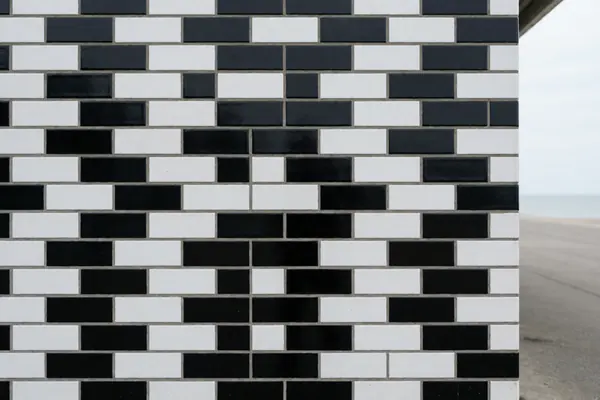
The café wall
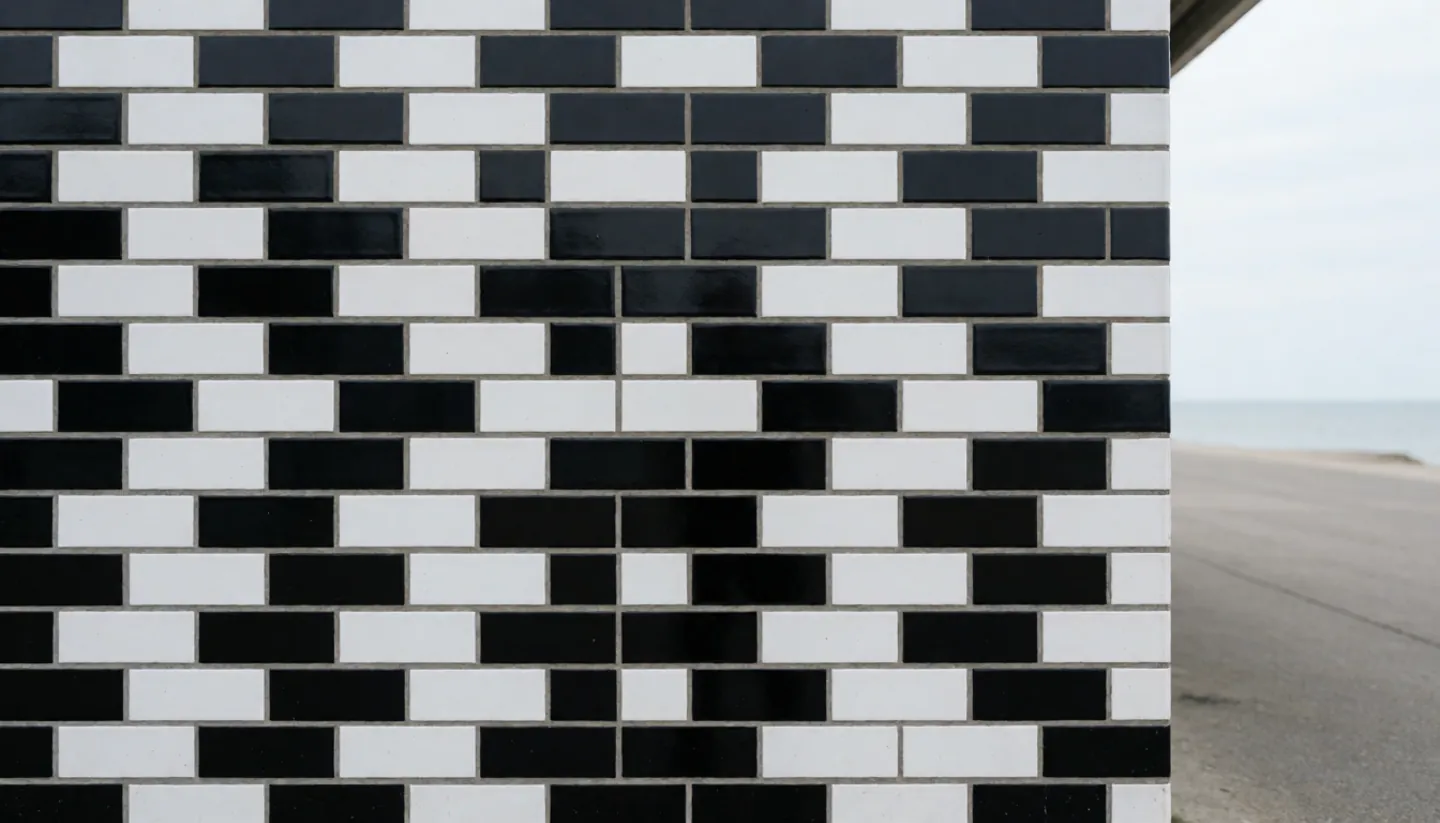
Rows of tiles shifted by half a tile make parallel mortar lines look sloped. It was noticed on a café on St Michael's Hill in Bristol.
Try an illusionSMALL MARVELS OF SEEING
An illusion is a mismatch between what is there and what you see.
Even when you know a café wall's lines are parallel, they still look tilted. Researchers use illusions like this to study how the eye and brain build a picture of the world.
KNOW IT, still see it
THE SHORT ANSWER
Most of the time those guesses are right.
Illusions show where the shortcuts are.
SHAPE
Rows of tiles shifted by half a tile make parallel mortar lines look sloped. It was noticed on a café on St Michael's Hill in Bristol.
Try an illusionMOTION
Stare at falling water, then at still rocks, and the rocks seem to drift upwards. It is a motion aftereffect, described in 1834.
See the datesCOLOUR
A famous picture of strawberries contains no red pixels, yet they look red. Colour constancy, which normally helps us, is at least partly responsible.
Why it happensFIVE CLASSIC ILLUSIONS
Pick an illusion to see what it does and how you experience it. The bar shows how long you need to look before it works, from instantly to about a minute.
Descriptions follow the Illusions Index (University of Glasgow) and Michael Bach's Visual Phenomena and Optical Illusions pages.
TWO DATES WORTH KNOWING
Some illusions are well over a century old,
and researchers still debate how they work.
1892
First published in a German humour magazine
An anonymous illustrator drew it for Fliegende Blätter; Joseph Jastrow popularised it in 1900. There is still debate over whether the experience itself changes when it flips.
DUCK-RABBIT · ILLUSIONS INDEX
1979
First reported by Gregory and Heard
A member of Richard Gregory's lab spotted the black and white tiles in Bristol. Similar effects had been studied by Pierce in 1898 and Fraser in 1908.
CAFÉ WALL · MICHAEL BACH
Michael Bach notes the café wall needs mortar of about middle brightness between the light and dark tiles, and that the illusion vanishes when the colours are set to equal luminance. He admits he does not fully understand how the tilt arises.
TRY ONE AT HOME
You only need squared paper, a dark pen and a grey pencil. The details matter, which is part of what makes it interesting.
Alternate dark and light squares along each row, like a chessboard.
Move alternate rows along by half a square so the dark squares no longer line up.
Draw a thin line between rows in a mid grey, halfway between the dark and light squares.
Check the lines with a ruler; they are parallel, but most people still see them slope.

WHY IT HAPPENS

Colour constancy lets us see an object's colour as stable under very different lighting. In the grey strawberries picture, the same mechanism that normally works in our favour makes grey look red.
The Illusions Index page on Troxler fading draws on research into the role of fixational eye movements in visual perception. Philosophers use illusions too, asking how we can know lines are parallel while still seeing them as tilted.
Questions
A pattern of dark and light tiles in rows shifted by half a tile, with grey lines between rows. The lines look angled to one another although they are parallel. Richard Gregory and Priscilla Heard reported it in 1979.
It is a motion aftereffect. After watching movement in one direction for some time, a stationary scene appears to move in the opposite direction. Robert Addams described seeing rocks move upwards in 1834.
The Illusions Index says colour constancy is at least partly responsible. It normally lets us see an object's colour correctly under different lighting, but here it makes grey patches look red.
If you keep your gaze fixed on one point, faint shapes in the edges of your vision slowly fade from view. It is named after Ignaz Paul Vital Troxler, a Swiss physician who lived from 1780 to 1866.
Not always. There is still debate about how the duck-rabbit works, and vision scientist Michael Bach writes that he does not understand how the café wall tilt comes about.
Sources
ABOUT THIS NAME
doodlemarvel.com is part of the DoodleSale portfolio. It isn't in an auction right now, but you can ask about leasing it.